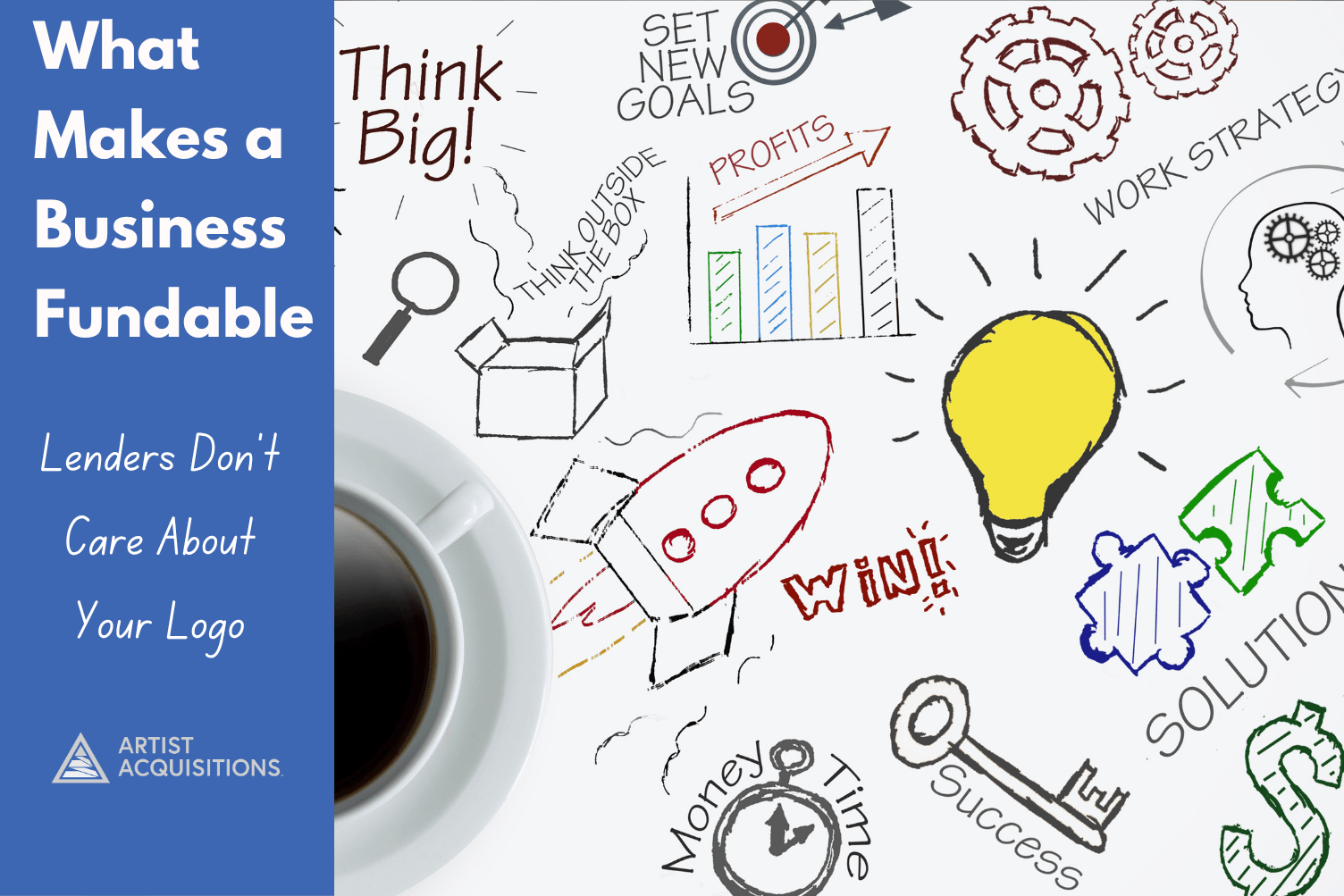
I’ll say this once: lenders do not care about your logo.
They care about whether your business looks legitimate, stable, and low-risk on paper. Most small businesses get denied not because they’re bad businesses, but because they’re not fundable yet.
Here’s what fundable actually means. What makes a business fundable is structure, consistency, credit, and proof that you’re serious about running a real operation.
What Fundable Really Means in Business Funding
Fundable doesn’t mean you have a great idea or a pretty website. It means you check the boxes lenders need to see before they’ll risk their money on you.
Lenders define fundability as: a registered business entity, clean credit profile, consistent revenue, proper documentation, separation between personal and business finances, and a clear repayment plan.
If you’re missing any of those, you’re not fundable yet. You might still be a good business. But good and fundable are two different things.
Risk assessment vs potential
Lenders assess risk, not potential.
You might have a business idea that could make millions. Doesn’t matter. If you don’t have revenue, time in business, or a track record, they’re not funding it.
They’re not betting on what might happen. They’re betting on what’s already happening.
I had a client with an amazing business plan. She was smart, motivated, and had a clear vision. She applied for funding and got denied. Why? Because she’d only been in business for two months. No revenue history. No proof. Just potential.
Lenders don’t fund potential. They fund proof.
Why ideas don’t get funded
You can’t walk into a lender with a pitch deck and expect business funding.
Ideas are free. Execution is what costs money, and execution is what lenders want to see.
If you’re still in the idea phase, you’re too early. You need to start the business first, generate some revenue, build a structure, and then apply.
I’ve seen people get frustrated because they think their idea is so good that lenders should just hand them money. That’s not how business funding works. You’ve got to show you can actually run a business before anyone will fund it.
The difference between legitimate and lendable
Your business can be legitimate without being lendable.
Legitimate means you’re a real business. You’ve got customers. You’re making sales. You’re operating legally.
Lendable means you meet the specific business funding requirements that lenders have. You’ve got the structure, the credit, the documentation, the consistency.
I’ve worked with businesses making six figures that weren’t lendable yet because their structure was a mess. Revenue doesn’t automatically make you fundable.

Business Structure Lenders Expect to See
If you’re operating as a sole proprietor with no registered entity, most traditional lenders won’t fund you.
They want to see an LLC, S-corp, or C-corp. Something that shows you’re treating this like a real business, not a side hustle.
Registering your business is one of the first steps to becoming fundable. It’s not expensive. It’s not complicated. And it’s non-negotiable if you want serious funding.
EIN, DUNS, and consistency
Your EIN is your business tax ID. You need one. Period.
Your DUNS number is a business identifier used by lenders and vendors to track your business credit. You should get one. It’s free through Dun & Bradstreet.
But here’s the thing: your business name needs to be consistent everywhere. Your EIN paperwork, your DUNS profile, your bank account, your domain, your invoices.
If your legal name is “ABC Solutions LLC” but your bank account says “ABC Consulting” and your website says “ABC Services,” lenders see that as a red flag. They don’t know which one is real.
Business bank accounts and separation
If you’re running business expenses through your personal bank account, you’re not fundable.
Lenders need to see a clear separation between your personal finances and your business finances. That means a dedicated business bank account. Business credit cards. Business expenses are tracked separately.
I worked with a client who had strong revenue but kept getting denied. Turns out she was depositing business income into her personal checking account. To her, it didn’t matter. To lenders, it looked like she didn’t have a real business.
Once she opened a business account and ran everything through it for six months, she got approved.
Why mismatched information kills approvals
I’ve seen businesses get denied because their application said one thing and their documents said another.
The legal business name doesn’t match the name on their website. The address on their EIN doesn’t match the address on their bank account. The phone number on their application is a personal cell, but their business listing shows something different.
To you, that might seem like no big deal. To lenders, it’s a sign you’re disorganized or hiding something. Either way, they’re not approving you.
Consistency matters. Every piece of information about your business should match across every platform.
Online Presence and Credibility Signals
If you’re emailing lenders from a Gmail address, you’re not fundable.
Lenders expect a professional business email. That means your own domain. YourName@YourBusiness.com, not YourBusiness123@gmail.com.
They also expect a real business phone number. Not your personal cell. A business line, even if it forwards to your cell.
And they expect a website. It doesn’t have to be fancy. But it has to exist. A one-page site with your services, contact info, and business name is better than nothing.
Why lenders verify online footprints
Lenders Google you. They check your business on LinkedIn, Facebook, Yelp, Better Business Bureau.
They want to see that your business is real. That you’ve been around. That you’re not just applying for funding and disappearing.
If they can’t find you online, that’s a problem. If your online presence is inconsistent with your application, that’s a bigger problem.
One client got denied because his business name was slightly different on his Google listing than it was on his LLC registration. It was just one word different. But the lender flagged it and denied the application.
What raises red flags instantly
Brand new domain registered last week. No reviews anywhere. No social media presence. Gmail email. Personal phone number. Inconsistent business name. P.O. box as the only address.
Any of those things raises red flags. Combine a few of them and you’re getting denied before they even look at your financials.
Why professionalism matters more than aesthetics
Your website doesn’t need to look like Apple’s.
But it does need to look like you care. Basic design. Clear information. Contact details. Professional language.
A clean, simple website beats a flashy one with typos and broken links. Lenders aren’t judging your design skills. They’re judging your professionalism.
I’ve seen businesses with ugly websites get funded. I’ve also seen businesses with beautiful websites get denied because they had a Gmail address and no business phone number.
Professionalism is about structure and consistency, not aesthetics.
Credit Profiles That Support Business Funding
Personal credit thresholds
For most traditional lenders, you need a personal credit score of at least 650 to have a real shot.
Below that, your funding options shrink fast. You might still find alternative lenders, but the terms won’t be good.
Above 700, your options open up. Above 750, you’re in great shape.
Your personal credit is one of the first things lenders check, especially if you’re early in business and don’t have much business credit yet.
Business credit basics
Business credit is separate from personal credit. It’s based on how your business pays its bills.
To build business credit, you need trade lines. That means vendor accounts that report to business credit bureaus. Office supply stores. Fuel cards. Net-30 accounts.
You also need business credit cards that you pay on time every month.
Building business credit takes time. You can’t fake it. You can’t rush it. You’ve got to open accounts, use them, and pay them off consistently.
But once you’ve got strong business credit, it makes business funding approvals way easier.
What lenders look for before approving
They look at your personal credit score. Your business credit score. Your debt-to-income ratio. Your payment history. Your credit utilization.
They want to see that you borrow responsibly and pay things back on time.
If you’ve got maxed-out credit cards, late payments, collections, or charge-offs, that’s going to hurt your chances.
Clean credit doesn’t guarantee approval. But messy credit almost guarantees denial.
Why “good credit” alone fails
I’ve said this before, but it’s worth repeating.
Good credit helps. But it’s not enough.
You can have a 780 credit score and still get denied if your business structure is weak, your revenue is inconsistent, or you’ve only been in business for three months.
Credit is one piece of business funding eligibility. It’s not the whole thing.
Common Reasons Businesses Aren’t Fundable
Applying too early
This is the number one mistake I see.
People register their business, open a bank account, and immediately apply for funding. They think that’s all it takes.
But lenders want to see time in business. At least six months, ideally 12 or more. They want to see consistent revenue deposits. They want to see that you’ve been around long enough to prove you’re not just going to disappear in three months.
If you apply too early, you’re wasting an application and hurting your chances later.
Poor documentation
Lenders ask for documents. Tax returns. Bank statements. Profit-and-loss statements. Business licenses.
If you don’t have those things, or if they’re messy, you’re not getting approved.
I worked with a client who didn’t have clean bookkeeping. Her revenue was strong, but her records were all over the place. Personal expenses mixed with business expenses. No clear tracking. She got denied.
We spent two months cleaning up her books. Then she applied again and got approved.
Documentation isn’t optional. It’s part of being fundable.
Inconsistent information
Your business name is different on your bank account, your website, your EIN, and your loan application. Your address doesn’t match across platforms. Your phone number changes every time they see it.
That’s inconsistency, and lenders hate it.
They don’t have time to figure out which version of your information is correct. If it doesn’t match, they assume something is wrong, and they move on.
No funding strategy
A lot of businesses apply for funding without a plan. They just need money, so they apply everywhere and hope something sticks.
That’s not a strategy. That’s desperation. And lenders can smell it.
A funding strategy means knowing what you need, why you need it, which lenders match your profile, and when to apply.
It means building your fundability first, then applying strategically instead of shotgunning applications everywhere.
How to Make Your Business Funding-Ready
Preparing before applying
Get your entity registered. Open a business bank account. Get an EIN. Get a DUNS number. Set up a business email and phone line. Build a simple website. Start building business credit with vendor accounts and business credit cards.
Do all of that before you apply for any serious funding.
If you skip those steps, you’re applying before you’re ready. And that means you’re getting denied.
Sequencing funding steps
Don’t apply for a $100K term loan when you’re six months into business with no credit profile.
Start small. Business credit card. Small vendor accounts. Maybe a small line of credit once you’ve built some history.
Then move up. Bigger credit lines. Term loans. Equipment financing.
Sequencing matters because each approval makes the next one easier. And each denial makes the next one harder.
Avoiding unnecessary inquiries
Every time you apply for funding, it hits your credit. If you apply to 10 lenders in one month, that’s 10 hard inquiries.
Future lenders see that. And they wonder what’s wrong with your business if everyone else said no.
Don’t shotgun applications. Apply strategically. If you’re not confident you’ll get approved, don’t apply yet.
Build your fundability first, then apply when you’re ready.
When to wait and build
If you’re not fundable yet, don’t apply. Wait.
Spend six months building business credit. Get your documentation clean. Make sure your information is consistent everywhere. Build some revenue history.
Then apply.
Waiting feels frustrating. But it’s better than getting denied three times and tanking your credit in the process.
I’ve told clients to wait before applying. Some listened and got approved six months later. Some didn’t listen, applied anyway, got denied, and then had to wait even longer because now they had denials on their record.
Patience is part of business funding planning.
Don’t apply until you’re actually fundable. Download the business funding readiness checklist at successwithlatoya.com to see where you stand.